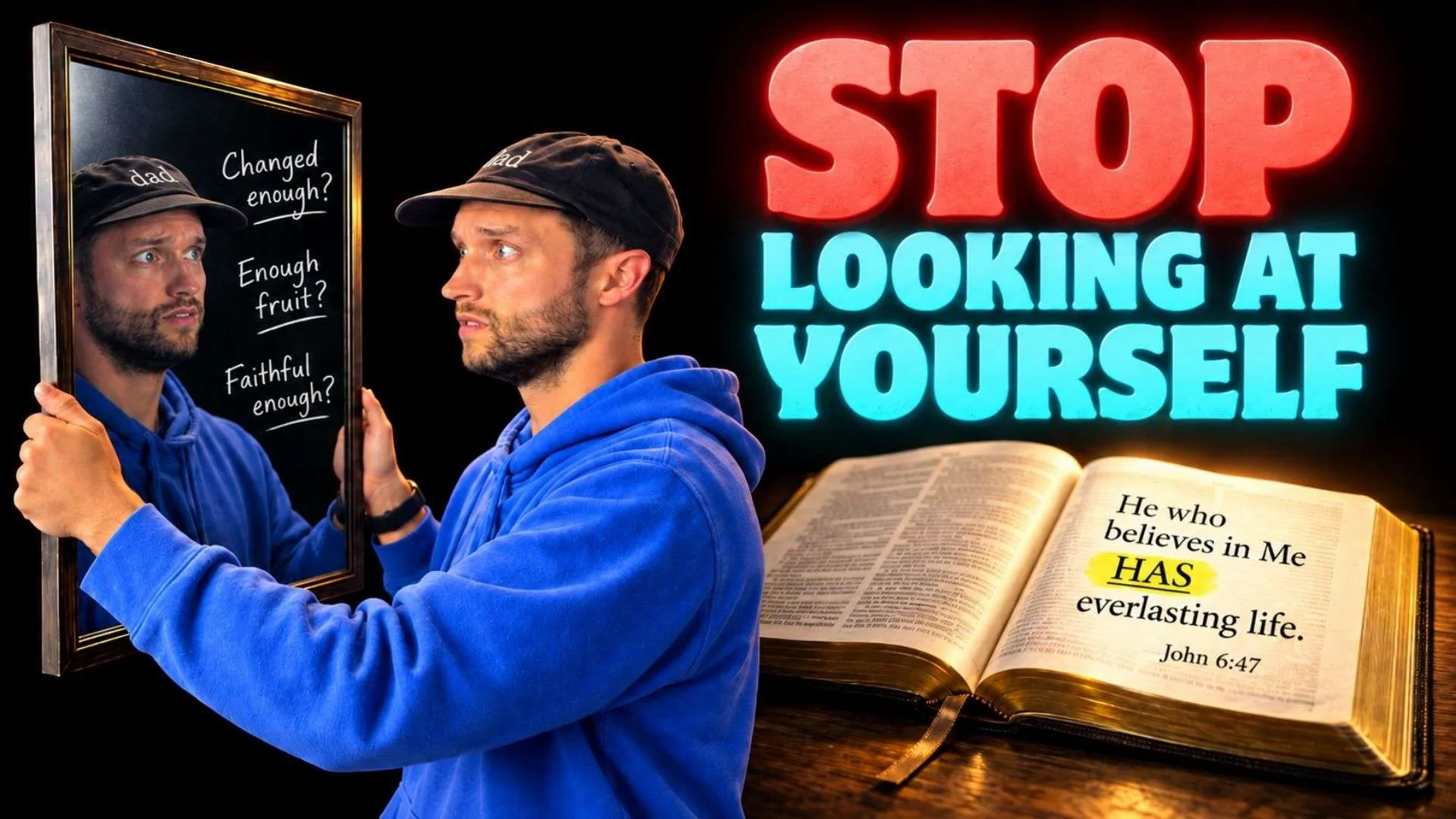
Few questions weigh on the heart like this one. Maybe you've lain awake wondering whether you've done enough, repented enough, or changed enough. Maybe you prayed a prayer years ago and aren't sure it "took." Or maybe you've heard that real Christians can be recognized by how they live, and when you look at your own life, you come up short.
If that's you, here's good news: God doesn't want you to wonder. He wants you to know.
The apostle John wrote with this exact goal in mind:
"These things I have written to you who believe in the name of the Son of God, that you may know that you have eternal life..." (1 John 5:13, NKJV)
Notice what John says. Not "that you may hope," or "that you may guess," but "that you may know." And notice who he's writing to: those who believe in the name of the Son of God. Assurance isn't reserved for spiritual elites or people who've reached a certain level of maturity. It belongs to everyone who believes in Jesus.
At the heart of assurance is a simple truth: eternal life is a promise from Jesus, and Jesus keeps His promises.
"Most assuredly, I say to you, he who believes in Me has everlasting life." (John 6:47, NKJV)
It's hard to imagine a clearer statement. Jesus doesn't add conditions. He doesn't say, "Whoever believes and keeps believing perfectly," or "Whoever believes and proves it with a changed life." He says whoever believes in Him has everlasting life. Present tense. Right now.
He says something similar in John 5:24:
"...he who hears My word and believes in Him who sent Me has everlasting life, and shall not come into judgment, but has passed from death into life." (NKJV)
Three things are true of the believer here. You have everlasting life. You will not come into judgment. And you have already passed from death to life. These aren't hopes for someday. They're settled facts, resting on the word of the One who cannot lie.
So the question "How can I know I'm saved?" really comes down to another question: Do you believe Jesus' promise? If you are trusting in Jesus Christ for eternal life, you have it, because He said so.
This is where many people get tripped up. Somewhere along the way, they picked up the idea that salvation depends, at least in part, on them: their behavior, their obedience, their consistency. But Scripture is clear:
"For by grace you have been saved through faith, and that not of yourselves; it is the gift of God, not of works, lest anyone should boast." (Ephesians 2:8-9, NKJV)
A gift is, by definition, free. If you had to earn it, or keep earning it, it would be a wage, not a gift. Paul makes the same point in Romans:
"But to him who does not work but believes on Him who justifies the ungodly, his faith is accounted for righteousness." (Romans 4:5, NKJV)
Read that again: to the one who does not work, but believes. God doesn't justify the deserving. He justifies the ungodly, people like you and me, when we simply believe in Him.
Many sincere Christians have been taught to look inward for assurance. "If you're really saved," the thinking goes, "you'll see the evidence in your life." So they examine their behavior, searching for proof.
The problem is that our lives are a moving target. One day you're reading Scripture, serving others, and walking closely with God. The next, you lose your temper, slip back into an old habit, or drift for weeks without praying. If your assurance rises and falls with your performance, you'll never have real assurance at all, only constant, anxious self-checking.
And how good would "good enough" be? How many sins would disqualify you? How much fruit would prove you're genuine? No one can answer those questions, because Scripture never asks them. The standard was never your righteousness. It was always Christ's.
When you look to your works for assurance, you're ultimately trusting in yourself. When you look to Jesus' promise, you're trusting in Him. Only one of those is a solid foundation.
None of this means how we live is unimportant. Scripture calls believers to walk in the Spirit, to grow in grace, and to examine ourselves. These things are vital, but they answer a different question.
An honest look at your life can tell you whether you're walking in fellowship with God. It can show whether you're living by the power of the Holy Spirit or in your own strength, and whether there's sin you need to confess and turn from. That kind of self-examination is healthy and good.
What it can't tell you is whether you're saved. Your fellowship with God may grow warm or cold, but your standing as His child doesn't change. A son who wanders is still a son. And eternal life, once given, is still eternal.
So yes, examine your walk. Pursue holiness. Draw near to God. But do it as someone already secure in His family, not as someone trying to earn or prove a place in it.
At this point, someone almost always asks: "But what about James? Didn't he say 'faith without works is dead'?"
It's a fair question, and it deserves a careful answer. We've written a full article on it here: What Did James Mean by "Faith Without Works Is Dead"?
If you've been carrying the weight of uncertainty, you can set it down. Your salvation doesn't depend on how well you performed this week, or on whether your life looks "Christian enough" to someone else. It depends on Jesus Christ: who He is, what He did on the cross, and what He promised.
He said that whoever believes in Him has everlasting life. Do you believe Him? Then you can know, with complete confidence, that you are saved.
Not because of what you've done. Because of what He said.