Esther 1
1:1-2 Ahasuerus was the king of the Medo-Persian Empire, in the location known as Iran today. A half-century earlier, Cyrus the Great had given the Jews permission to go to their homeland, and yet many stayed, despite the king’s permission and God's prophetic command to return (Is 48:20; Jer. 29:10; 50:8).
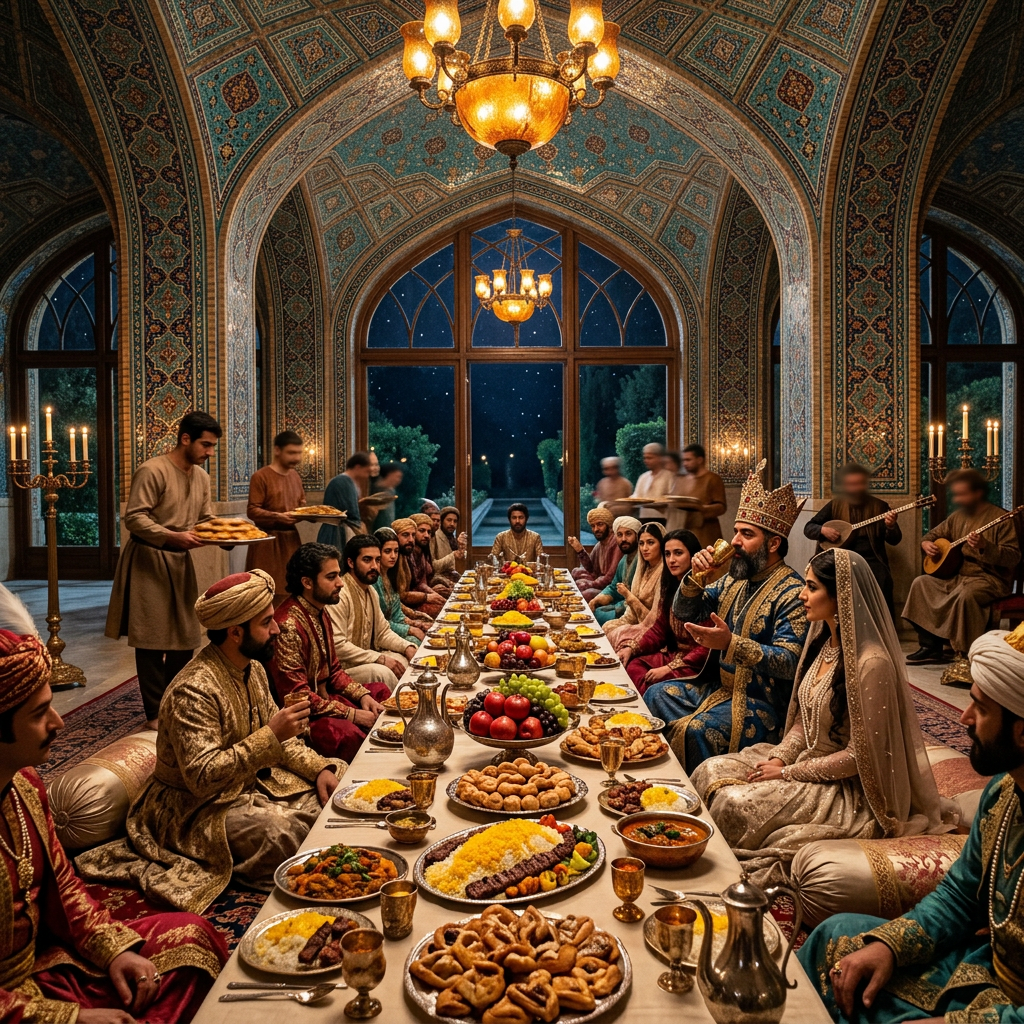
The setting is one of the king’s four residences, Shushan. He hosted a multi-month governmental summit. The entire royal affair was a tremendous spectacle considering that there were over one hundred and twenty-seven provinces, from India to Ethiopia and that all his officials and servants—the powers of Persia and Media, the nobles, and the princes of the provinces came before him, seemingly for an egotistical purpose.
1:4-5 Many have misread these verses, thinking that his feast lasted an unthinkable one hundred and eighty days in all. In reality, the summit lasted half of the year and concluded with a seven-day feast.
For strategic and administrative reasons, it seems unlikely that Ahasuerus would have gathered his entire administration at one time and place. It also appears that the princes were receiving mail at home by the end of the feast. (v 22) One possible explanation might be he hosted staggered visits from the heads of state for the preceding 180 days. After which, he held a giant feast lasting seven days for all the people who were present in Shushan. The sense is that this was a huge banquet with hundreds or even thousands in attendance.
1:6-8 The extravagance of the feast was incredible. One of the most coveted commodities was wine. He provided the guests liberal libations, according to each man’s pleasure.
1:9-10 Women in the ancient world were subordinated, separated, and considered inferior in nearly every way. The entire book of Esther disagrees with that philosophy. It proves the weakness of male chauvinistic thinking and demonstrates the losses a society sustains when it brutally subjugates women. It likewise shows the gains a society experiences when it respects women's perspective, intelligence, and bravery. The court of Ahasuerus would soon be taught the value of a brave, intelligent, and persistent woman.
Modesty was ingrained in Persian women. Face veils in the presence of the opposite sex were enforced. After seven days of drinking, Ahasuerus was ready to forgo custom and show off his wife to his inebriated guests. He had put all his possessions on display (v 4) and likely considered his wife as property too. He planned to conclude the entire affair by parading her beauty before them in inappropriate attire. Since Vashti was throwing a feast for the women, she was not suitably dressed for appearing before a room of drunken men. The only thing the King instructed her to wear was her royal crown. The catalyst for forthcoming events occurred when Queen Vashti refused to come at the king’s command. This made him furious.
1:13-15 Probably by force of bureaucratic habit, the king consulted his advisors, who were present, likely as drunk as he, and undoubtedly desired a sight of the queen in scanty apparel. The king asked, “What shall we do to Queen Vashti, according to law, because she did not obey the command of King Ahasuerus?”
1:16-20 In a classic case of drunken logic, the king’s advisors concoct an overblown hypothetical that is as male chauvinistic as it is vengeful.They blurringly surmise that the queen’s behavior will become known to all women so that they will despise their husbands… Thus, there will be excessive contempt and wrath. What could have been taken care of with a calm husband-and-wife discussion is turned into a war council of the joint chiefs. The advisors suggest the king produce a binding decree that dethrones Vashti. They will then create a search party to enthrone one who is better than she. They seem proud of their inebriated ingenuity, self-adulating that all wives will honor their husbands, both great and small. It’s amazing what a room of drunken men believe they can solve with impromptu planning and hasty implementation.
1:21 A king’s orders, even drunken ones, must be obeyed. In his state, he liked the plan and enacted it straight away. Letters went out to every head of state with strongly-worded instructions. The message said that each man should be master in his own house and speak in the language of his own people. This was probably something already happening and likely left many heads of house wondering why there was need for such a royal proclamation.
This chapter shows how much danger the king's subjects could quickly find themselves in and how unpredictable and devastating the king's whims might prove to be. It's amazing how God would use drinking party planning to prepare preservation for His chosen people.

