

“The one who enters by the gate is the shepherd of the sheep. The gatekeeper opens the gate for him, and the sheep listen to his voice. He calls his own sheep by name and leads them out. When he has brought out all his own, he goes on ahead of them, and his sheep follow him because they know his voice” (John 10:2-4).
What would you do if one of your parishioners, who had been blind from birth, experienced a miracle and could see again?
In John 9, the Pharisees kicked that man out of the synagogue (cf. John 9:34)! They were being terrible shepherds of the people.
In response to their outrageously bad pastoring, Jesus tells a story about a shepherd and his sheep that describes what a good shepherd does.
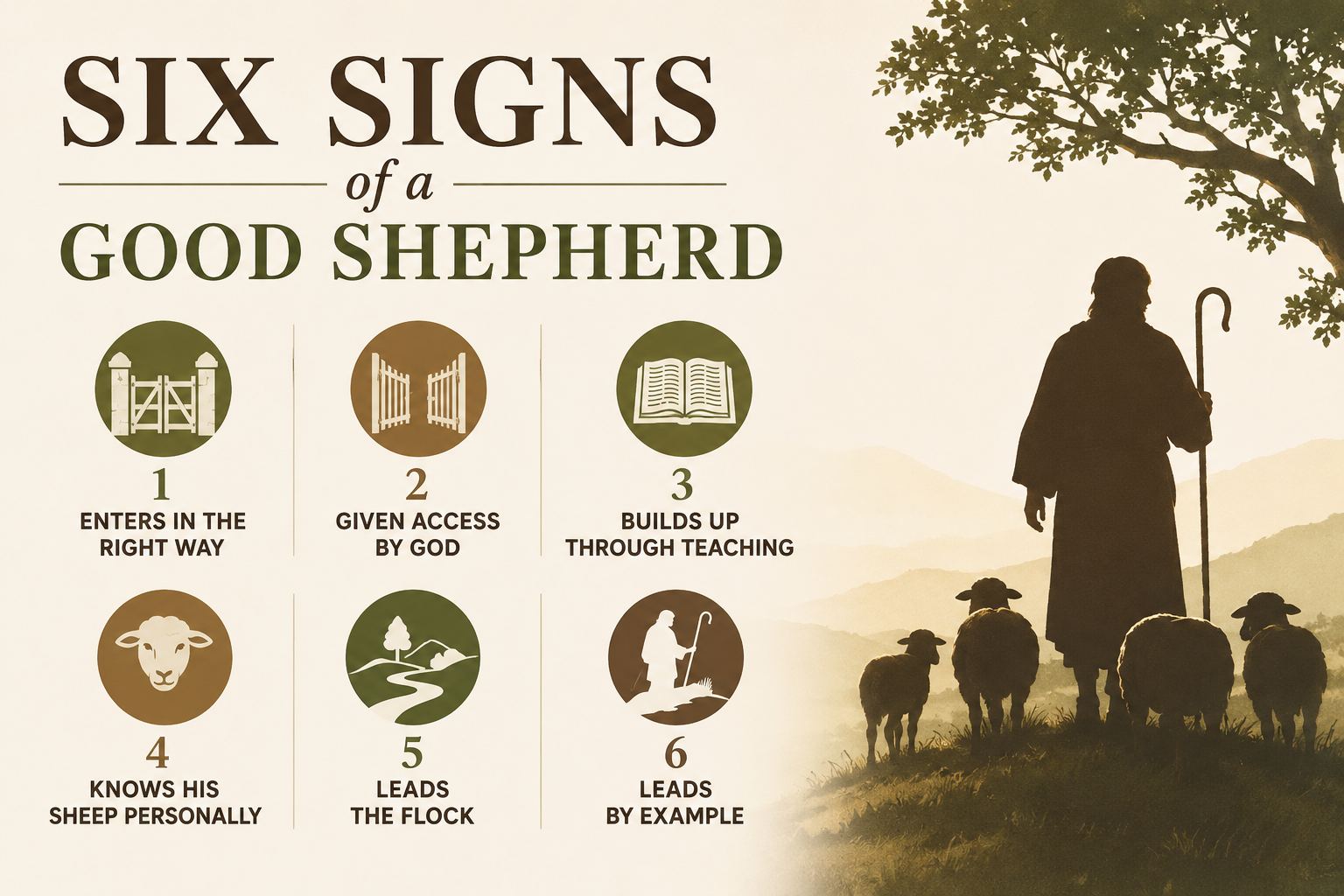
First, a good shepherd enters ministry in the right way (v 1, “he enters by the gate”). In other words, the good shepherd doesn’t manipulate his way into leadership. He doesn’t buy his position (known as “simony”). Nor does he simply inherit the ministry from his father or treat the ministry as a good career move. Rather, he is called by God, gifted by the Spirit, and that gift is recognized by the church body.
Second, God grants a good shepherd access to the sheep (v 3, “The gatekeeper opens the gate for him”). Whether the gatekeeper represents God the Father or the Holy Spirit, effective ministry cannot be given to you through seminary degrees, but by divine approval.
Third, a good shepherd builds up the sheep through teaching (v 3, “The sheep listen to his voice”). He proclaims the gospel to them and teaches them with the Word of God, nourishing, correcting, and encouraging as needed.
Fourth, a good shepherd knows his people personally (v 3, “He calls his own sheep by name”). An effective pastor knows his people’s names, struggles, joys, and sorrows, and cares for them in their specific situations. If there are too many sheep for the pastor to oversee effectively, individuals will scatter, become susceptible to predators, and go hungry or fall ill without proper care.
Fifth, a good shepherd leads the flock (v 3, “and leads them out”). The Christian walk is full of movement. Just as a good shepherd leads his sheep to green meadows and running water, the pastor leads his sheep towards spiritual maturity and closer communion with God.
Sixth, a good shepherd leads by example (v 4, “he goes on ahead of them, and his sheep follow him”). He doesn’t simply tell the sheep what to do but shows them how to do it by living what he preaches. He doesn’t drive them from behind, but leads them by being the first to follow Christ.
Do you recognize these six signs in your pastor's life? How about yours?
__________________________________
Shawn Lazar (DPT, McMaster Divinity College) is the pastor of Gateway United Baptist Church in Denton, TX. Purchase his book One-Point Preaching here and his latest book Once Saved Always Saved? here.

