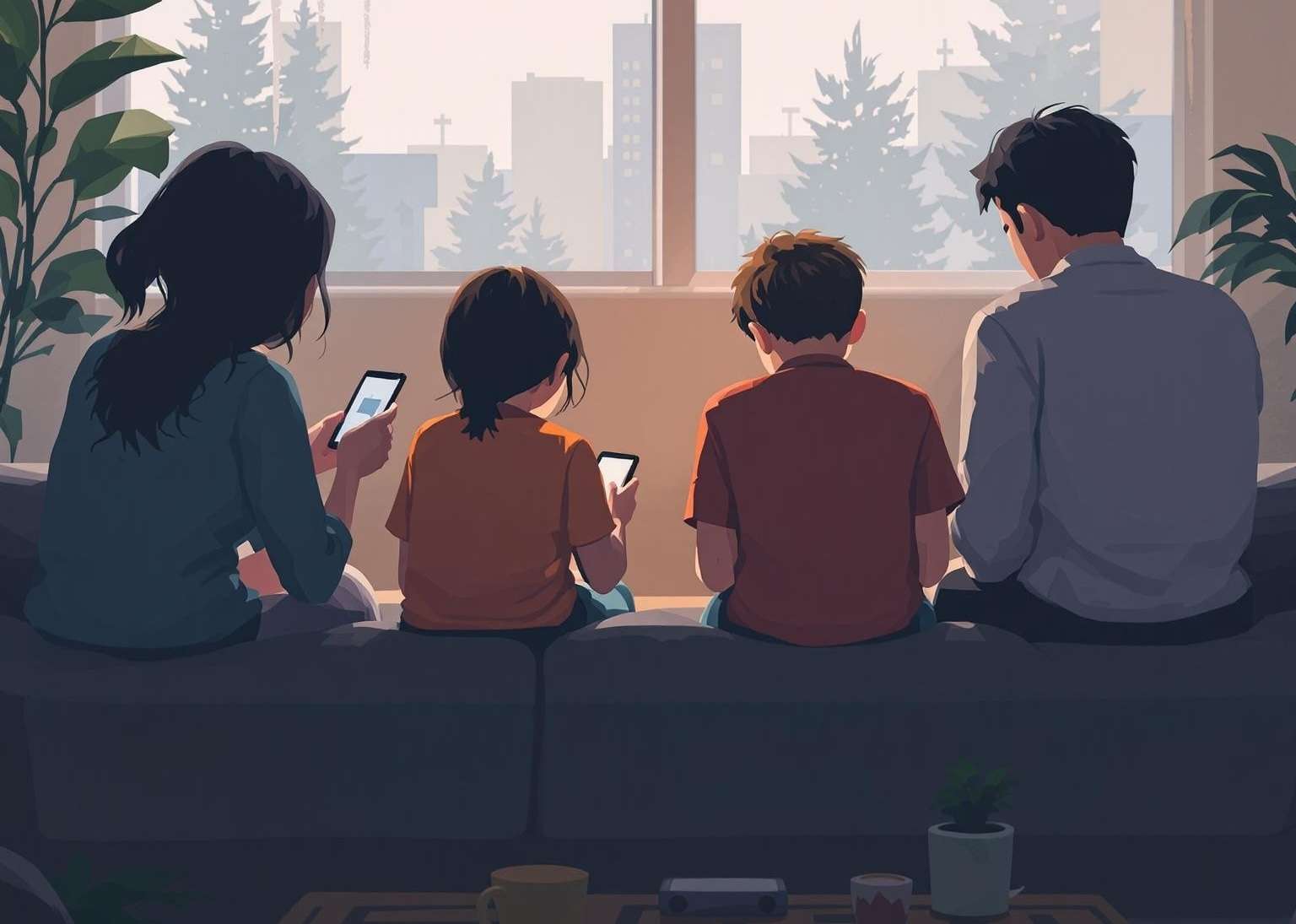
“My son wants to play video games constantly!”
“My daughter is on social media every minute of the day!”
“I want to talk to my mom but she’s always on her phone!”
“I want to have my Dad’s attention but he won’t turn the TV off.”
These frustrations and many more are experienced every day in households like yours and mine across the world. Screens dominate our lives.
When my kids were young, we noticed a problem. When screens went off, there were fits. When screens were on, the family felt fragmented. We were trapped and weren’t the only ones.
There have been loads of studies that show the horrifying effects of excessive screen time on families. Here are a few quick examples:
Twenge, J. M., & Campbell, W. K. (2018): This study in Emotion found that increased screen time is associated with heightened levels of anxiety and depression among adolescents, affecting family dynamics and overall mental health.
McDaniel, B. T., & Radesky, J. S. (2018): Published in Child Development, this research discusses "technoference," where parental screen use leads to decreased parent-child interactions, resulting in behavioral issues and family tension.
Uhls, Y. T., et al. (2014): A study in Computers in Human Behavior demonstrated that children who spent less time on screens exhibited better social skills and empathy, suggesting that excessive screen use can hinder emotional and social development.
But you don’t need to read studies to realize there’s a problem. So what are you going to do about it?
I’m releasing a book titled ISOLATION soon. It’s a YA adventure sci-fi novel. One of its purposes is to offer a fresh look at what healthy digital habits can be.
I don’t want to give too much away because I hope you’ll read it, but in the book, there is a family you will meet, and they have a unique approach to screens and digital media. The inspiration for this family’s digital habits is taken from some experiments me and my family have tried and experienced great success.
There are two ways to approach eating. You can either have scheduled healthy meal times, or snack all day long on whatever junk food you want.
Think of screen time in the same way. We decided to go with the scheduled approach a few years ago. We’ve discovered amazing success in this simple approach. Here is our simple schedule:
No screen time Monday - Thursday.
Friday through Sunday, 4pm - 5pm video games.
Friday through Sunday, 5pm - 8pm movie/show.
Now, some of the kids homework is on a laptop, and occasionally, we look at family photos and videos on the TV on non-screen-time nights, but other than that, we stick to this rule.
It’s had amazing success. We have entire days where the kids get PRACTICE at resisting screen time. They don’t ask if they can play video games. They don’t ask if they can watch a movie. They don’t ask to look at the iPad. They ask, “What day is it?” (If they don’t know). Think about the difference here. I don’t ever have to argue with them about screen time because the days are set. If you decide to get a copy of my new book ISOLATION for your teens, they will encounter this beautifully simple approach about midway through the book.
Another amazing thing is that this gives our family distraction-free evenings together. We currently have a secret family club, but the first rule of this family club is that we don’t talk about it to non-members. So, sorry I can’t tell you about that one. We also read together, do dinner together, play, and laugh a lot. It’s fantastic. If the TV was on, or the iPad out, none of that would be possible. It’s a beautiful world for us. It’s dream-like. It’s idealic. Part of why I put those characters in my latest book, ISOLATION, is because I want everyone to experience this kind of family time.
When we started doing this, I just thought this was my crazy idea, but recently, I found out that there is research to back this up. Here are a few examples:
Gentile, D. A., et al. (2014): Published in Developmental Psychology, this study found that structured screen time can improve children's sleep, academic performance, and behavior, supporting the benefits of scheduled digital use.
Radesky, J. S., & Christakis, D. A. (2016): This research in JAMA Pediatrics emphasizes the importance of creating a family media plan, which includes scheduled screen time to enhance family interactions and child development.
American Academy of Pediatrics (2016): Their guidelines recommend setting consistent limits on media use and creating media-free times, encouraging families to adopt scheduled screen time to foster better habits and relationships.
So, if you only take one thing from this post, I’d love foryou to implement a screen-time schedule for your family.
But… if you do two things from this post, I’d also love for you to get my new book ISOLATION, which is a young adult novel that I think your teens will enjoy. I believe it will encourage them to accept your new screen-time schedule.
Go make the world better for those beautiful kids. The time is short. The moments together matter. You can do it!