


When I was in college, I had an acquaintance who loved to argue about theology. I often saw him following others around, talking incessantly, trying to find someone to debate. Most didn’t take the bait, but occasionally, I’d spot him and another going at it. One day, he picked me up to try his pitch.
As he talked breathlessly of God’s irresistible drawing, I listened. He explained that God would drag the elect into the kingdom, kicking, screaming, and clawing the ground if He had to. I tried to protest, attempting to give a different point of view. He rolled over me like a team of full steam road construction equipment. After listening for a few more moments, I spotted an opening when the guy paused for a breath.
“Listen, man,” I said. “I don’t know much about what you’re talking about, but I know that your presentation isn’t very loving.”
As I think about what is said about Ephesus in our passage today, I wonder if maybe Ephesus had a similar tone to my friend. It seems there were some fantastic theologians and moralists in the church there, but they had a love problem.
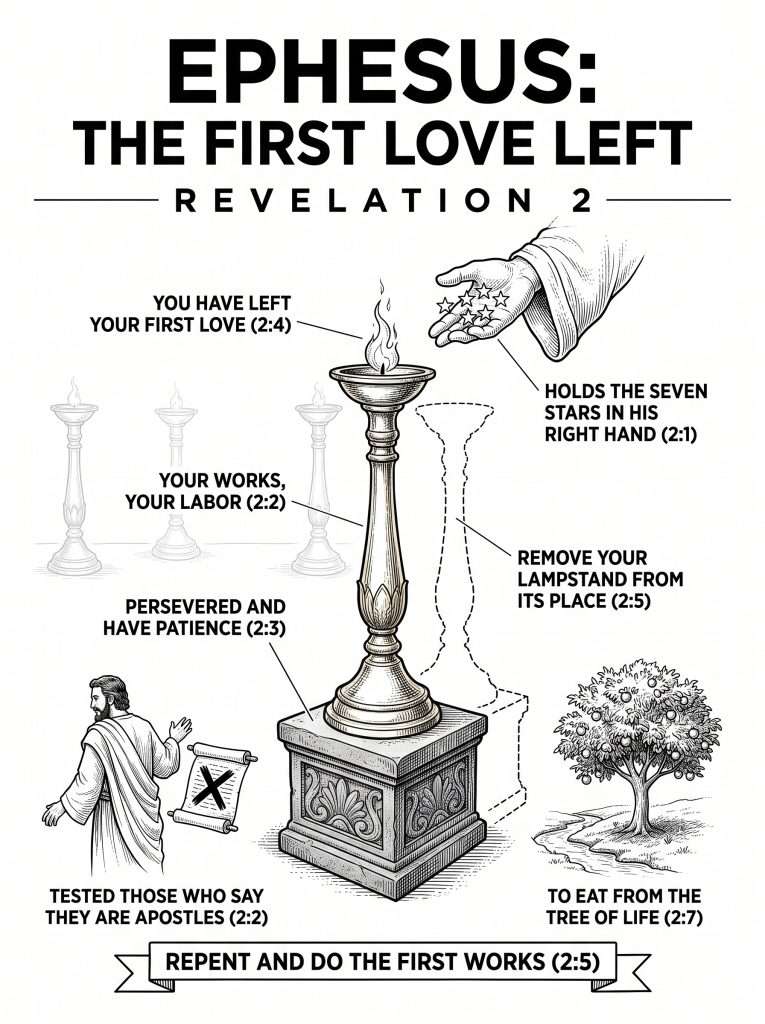
We're looking into Jesus' message to the Ephesus church, a group known for their hard work and strong beliefs but who forgot what mattered most: their love for Jesus. We'll see how Jesus praises their good actions but also warns them about losing their special connection with Him. This story is a powerful reminder for us all to keep our love for Jesus at the heart of everything we do.
“To the angel of the church of Ephesus write,
‘These things says He who holds the seven stars in His right hand, who walks in the midst of the seven golden lampstands: “I know your works, your labor, your patience, and that you cannot bear those who are evil. And you have tested those who say they are apostles and are not, and have found them liars; and you have persevered and have patience, and have labored for My name’s sake and have not become weary. Nevertheless I have this against you, that you have left your first love. Remember therefore from where you have fallen; repent and do the first works, or else I will come to you quickly and remove your lampstand from its place—unless you repent. But this you have, that you hate the deeds of the Nicolaitans, which I also hate.
“He who has an ear, let him hear what the Spirit says to the churches. To him who overcomes I will give to eat from the tree of life, which is in the midst of the Paradise of God.” ’
2:1 Jesus tells John to write to the angel, which is the the group of leaders of the church of Ephesus. This was likely John’s home church, the people of which he probably missed very much. The city itself was famous in the ancient world for its economic power, and its temple to the pagan god Artemis.
Jesus begins by reminding them who He is. He’s the One who holds the seven stars in His right hand. The seven stars represent the seven angels, which means the group of teachers/leaders of the churches (1:20). Jesus also wants them to remember that He is the One who walks in the midst of the seven golden lampstands. The lampstands represent the seven churches of the region (1:20). All of this gives the sense that Jesus is intimately aware of what they are doing. He’s watching closely, which is a lesson we all need to remember.
2:2-3 Jesus has a list of good things to say about the believers in Ephesus. He says they have good works… labor… patience. They are not only a church of action, but they also are a group that cares about sound doctrine. They don’t stand for bad theology or conduct among their number, as they cannot bear those who are evil. Not only are they discerning about the laity, but they also expect Godly character from their leadership. As such, they hadthose who had claimed to be apostles and are not and have found them liars.
They were such astute theologians that they had stripped false apostles of their fake IDs. He reiterates that they have persevered in their good work, …have patience, and have labored for His name’s sake. It can be easy to labor for a while but fade over time. However, that’s not how the Ephesians are. They have not become weary. They take their theological and moral work seriously. They are morally and theologically strong.
2:4 Jesus’ words to the Ephesians believers are not all good. He says that they have left their first love. There are those who claim Jesus means the Ephesian believers have lost their salvation. That is impossible since salvation is secured by the very one who is speaking to them (John 5:24, 6:37-40, 10:28-29, Romans 8:38-39). There are others who claim that the Ephesian church members must have never been saved in the first place, but that is impossible since Jesus is speaking to the church, and the church, by definition, is made up of believers. In addition, the good review they’ve already received proves they are not only believers, but they are morally and theologically sound (vs 3).
It seems that the church in Ephesus had become a “thinking” church but had lost its “heart,” so to speak. They were focused on defending correct doctrine, theological examination, keeping the teaching pure, and following a moral lifestyle. So much so that they were even a testing ground for true apostleship; they were so acute at this pursuit that more than one false apostle had been exposed as such and lost their fake credentials at Ephesus (vs 2-3). They were academic and scrutinizing, and they served a need for their generation.
However, They had lost their passion, sincere devotion, and enthusiasm. They moved through the motions, but it was no longer being done out of love for their savior.
Many churches fall into this even today. It is easy for a congregation to become a place where academic concepts are discussed, but no passion is on display. There are churches full of people who follow moral habits but have lost their excitement.
We must remember that this does not mean they or we will miss out on Heaven if we struggle with the same, but it does mean they and we will likely lose some opportunity to receive a full reward when Christ returns. There are many who will miss out on eternal reward because they are too focused on theological disputes and moral correctness to the exclusion of love for Christ and others. Jesus gives them the prescription in the next verse.
2:5 Jesus’s solution is first to recall the joy they had at the beginning. He tells them to remember therefore from where you have fallen. They were to think about the good old times and allow those warm memories to fuel their ability to repent and do the first works. Here, as in many places, “repent” means more than changing their mind or shifting their opinion. Jesus expects them to change their behavior. The sign that their behavior was sufficiently changed would be that they would do the first works.
We are not told what the first works were, but we can guess. A new believer prays, studies God’s word, fellowships, evangelizes friends, disciples, and serves others warmly with gratitude for God and thankfulness for their salvation. There is an initial excitement that virtually all new believers experience. Notice that He doesn’t tell them to change their heart, and the first works will follow. Instead, they are to do those first works, and the heart will follow. As they obey, their hearts would come in line with their actions.
Jesus gives a warning in case they ignore his instructions. If they don’t repent/change, Jesus promises to come to them quickly and remove their lampstand from its place. The lampstand represents the church (1:20), so he’s threatening to take away their church if they don’t repent.
2:6 Jesus’ sandwiches his rebuke between complements. He’s pleased that they hate the deeds of the Nicolaitans, which Jesus also hated. There isn’t much known about the Nicolaitans, but likely they were a sect within the early Christian church that advocated for a blend of pagan and Christian activities. It seems that they promoted involvement in the temple feasts and pagan sexual practices (vs. 15). Once again Jesus is reminding them not to abandon their strong commitment to moral and theological purity. He simply was not interested in them continuing to chase such passionless pursuits without also getting back to their first love and doing the first works as well (vs. 5).
2:7 The Ephesus effect is something that not only happened in Ephesus but something all believers should be on the lookout for. Jesus says that anyone who has an ear should pay attention. This phrase will become a repeated pattern as He speaks to the churches. Not only Ephesus, but all believers should learn from their anti-example because it can happen to you and me. We should all hear what the Spirit says to the churches.
If the church fails to repent, it will be removed from Ephesus (vs. 5); if it repents, it will be allowed to remain. Those are the stakes for the organization, but what about the individual? What are the stakes at the personal level?
Jesus answers by focusing on him who overcomes. The word that gets translated as overcome is the same word from which the sports brand Nike gets its name. Nike means to win! So a Nike Christian is a Christian winner, a victor, an overcomer. It’s difficult for some to believe that there are Christian winners and Christian losers, but it’s right there in the text.
Christian winners will get something special, a privilege that less committed Christians apparently won’t get to experience. Jesus promises to give the Nike believers the privilege to eat from the tree of life, which is in the midst of the Paradise of God. Is it possible that this is the same tree of life that was planted in Eden? I believe it is. This tree was the very tree that required Adam and Eve to leave the garden. In their fallen and unredeemed state, they could not be allowed to eat from it (Genesis 3:22-24). We know very little about the Tree of Life outside of what is mentioned in Genesis and Revelation. The final chapter of Revelation gives more information about the tree (Revelation 22), as we find it will apparently be transplanted to the eternal kingdom.
It would be easy to get distracted by unknown details and speculation. However, staying focused on the message is very important. Jesus’ message here, as will be repeated to each of the churches, is that there are those who will succeed in the Christian life, and there are those who will turn in a pitiful performance. Those who fight for victory, and stay committed to their first love will discover extraordinary privileges when they arrive in the kingdom of Heaven. Believers who settle for spiritual laziness will be given their promised place in Heaven but will miss out on certain privileges that could have been theirs.
I pray we take to heart what the Spirit is saying to the churches so that we can experience those great rewards.
This question is about verse 1. What does it mean for Jesus to hold the seven stars and walk among the seven golden lampstands, and how does this show His presence with His church?
considering verses two and three. How can a church today, like Ephesus, be active in good works and still maintain sound doctrine? Give examples.
Like Jesus said in verse four, What does "losing your first love" look like in a believer's life, and how can we prevent it from happening to us?
In verse five Jesus tells the Ephesians to remember, repent, and do the first works. What might be the "first works" for a modern-day Christian?
In thinking about verse six, How should Christians today identify and respond to teachings or practices in the church that resemble those of the Nicolaitans?
What does it mean to be an overcomer in the Christian life, and what is the significance of the promise to eat from the tree of life? Verse seven has a clue.
How does Jesus' message to Ephesus challenge us to balance our focus on doctrine, service, and love in our Christian communities?
Considering Ephesus was a significant city with economic power and pagan worship, how can Christians today stand firm in their faith while living in a secular or non-Christian society?
Reflecting on the Ephesians' loss of their first love, discuss ways a Christian community can reignite its passion and devotion to Jesus.
The Ephesians were commended for their discernment against false apostles and the deeds of the Nicolaitans. How can we develop discernment in our faith journey to identify and resist false teachings while still nurturing love and devotion to Christ?


Beautiful, Great teaching, love it, easy to understand