
A family podcast from Free Grace International.
This week on More To The Story: a six-year-old disappears into a Christmas crowd. A class ring slips into the tide. Researchers scatter thousands of wallets across the world and wait to see what happens. The most famous painting on earth goes missing, and for more than a day, no one notices. A soldier keeps fighting a war long after the world moved on. Workers clearing out a temple stumble onto something no one remembers losing. And Jesus tells three stories about things that go missing. Some lost things are never found. Some are never even missed. And some, it turns out, were being looked for the whole time.
3. Seventeen Thousand Lost Wallets
5. The Soldier Who Wouldn’t Quit
The complete episode transcript, as Lucas recorded it.

Story 1 · 0:00
I’m six, and I’m about to be lost for the very first time.
It’s Christmas in the Park at Six Flags Over Texas. The air is cold enough to sting, and it smells like kettle corn and sounds like Christmas music on a distant loudspeaker. The park has built a mountain of fake snow, and we ride toboggans down it, screaming the whole way, hitting the bottom in a spray of white, then hiking back up to do it all again. It’s the kind of night a boy like me wants to last forever.
Then we cross the railroad tracks, at least I think it’s “we”. Every so often the old steam train comes chugging through, breathing out white puffs into the dark and blowing the whistle so loud you feel it in your teeth, and my attention is given entirely to the tracks and the childish anxiety of anticipation. The rails shine under the lights. But the crowd makes it hard to watch for the train. People as tall as trees, moving all around me, are a forest of coats and elbows, all of them going somewhere.
I feel a shiver of cold. With my oversized gloves, I reach up for a hand. Absolutely confident at what I’ll find dangling over my head, without looking, because a hand is always there. It’s never been absent.
Until now.
So I look up. And every face is a stranger’s. It’s a jumble of chins, and hoods, ear muffs and haunted laughter from those that pass unaware of my unfolding trauma.
I’m wearing a blue coat, a gray stripe down one side. But it’s not thick enough to stave off the cold that is now emanating out from my frigid center. I’m beside a park bench, and hot tears run down my chapped, red cheeks.
I don’t know how long I’ve been lost. It might have been five minutes. It might have been fifty. But even a few seconds of this violent realization is more horrid than anything I’ve ever felt. I’m an inch tall in a crowd of giants, and none of them knows my name.
I’m an inch tall in a crowd of giants, and none of them knows my name.
Lucas Kitchen
“Mommy?” I cry. I spin and spin and spin. The pain is new. I’m never. I can’t. It’s visceral. Emotional horror grinds inside of me.
And then she’s there. With no approach, she simply appears and becomes my entire focus. More tears, but different this time. The release is intense.
I hear it in her voice before I see her face. It’s exasperation and relief and regret, all tangled up together, and somehow that tells me my feelings aren’t wrong, or childish, or misplaced. Being lost really is as bad as it feels. She felt it too.
She hugs me, and holds me, and clings to me, long after I’m no longer lost. And the warmth of being found could melt away every bit of man-made snow that park could make in a decade. It felt like coming home to be found.
Welcome · 4:34
I’m Lucas Kitchen. This is More to the Story. A family podcast from Free Grace International. We’re going to explore that which was lost and then found.

Story 2 · 5:00
Let’s start in 1979, with two brothers from Rhode Island. The older one is named Paul Benson. Paul went to a school called St. Raphael Academy, and when he graduated in 1964, he got a class ring, a gold one with the school’s name on it and his initials engraved inside: P, E, B. That ring meant a lot to Paul. And for a while it lived in a cabinet in a bedroom at the family house.
The younger brother is Eric. And in 1979, Eric is about 20. He has just finished a semester at the University of Rhode Island, and he and three friends have decided to take a Greyhound bus across the whole country. The ticket cost $69. They’re headed for Alaska to find work, but they stop in Seattle and decide to stay a while.
Before he had left for the trip, Eric opened that cabinet, saw his brother’s ring, and decided to bring it along, to remind him of home. He “borrowed” it. I put borrowed in quotation marks because I can’t find anyone who says Paul was asked before the ring was taken.
One evening, Eric and his friends walk down to the water to see the low tide. And, being 20, they start wrestling. One of the friends squeezes Eric’s hand so hard that he thinks the finger with the ring on it’s going to snap. So he pulls the ring off and sets it down on a rock. A very reasonable plan, right?
They go home for the night. And only then does Eric realize the ring is still sitting on that rock. He runs back. But the tide has come in, and the rock, and the little sandy bumps around it, are all underwater. The ring is gone.
So when Eric gets back to Rhode Island, he has to tell his brother. And Paul says, as Eric remembers it, “Why did you do that? Why did you take the ring?” And for the next four decades, at every family event, every gathering, the story of the lost ring comes up. Eric grows up, and eventually he moves to Israel. But you can move to the other side of the world and your family will still find a way to bring it up.
Now jump forward 46 years, to last November, to a beach near Seattle. It’s night, and the tide is low, so a strip of shoreline that is normally underwater is sitting out in the open. There’s a man named Lucas Thrun. He’s out there with a metal detector. Lucas is a Seattle lawyer, and this is his hobby. He’s swinging the detector back and forth he hits a spot that he says he had checked a dozen times.
And now I have to pause, because the man’s name is Lucas. My own. And I’ll tell you one thing about Lucas’s. We’re not all the same. I for one am terrible about losing things. And often never finding them. But I’m glad that this Lucas is out there because he’s evening the score.
He gets a signal. On his metal detector. It’s the kind that, he says, usually means a nickel or a pull tab from a soda can. He digs about three inches down into the clay, and instead of a pull tab, he pulls up something big and round with a hole in the middle. It’s too dark to tell what it is. But in the little light from his machine, he can see that it looks like it’s gold.
Once he gets at home, he finds that it’s a ten-karat gold class ring from St. Raphael Academy in Rhode Island. Inside there are letters P, E, B. And that is all he has to on. As Lucas put it, how in the world did a ring from Rhode Island end up in the mud in Seattle?
So he emails the school’s alumni office in December. They’re intrigued. When he checks in again in February, they tell him they found a graduate from 1964 with those exact initials. But then, nothing. Months of nothing. Lucas calls in May. He calls in June. Nobody answers. He figures that that’s the end of the road. And then, in the middle of August, an email arrives from the school’s alumni director. They found him. They actually went to his house, spoke with his wife, and gave her Lucas’s email address.
A few weeks later, another email shows up, this time from a man Lucas has never heard of. He says he’s Paul’s brother. His name is Eric. And he says, in effect, I’m the one that lost it. Then he tells Lucas exactly where it went into the water. It’s the very spot where Lucas found it.
Here’s where the plan comes together. Eric lives in Israel, but he comes back now and then to visit family, and he already has a trip planned to the United States for the fall. So he and Lucas start messaging on WhatsApp and pick a date when Eric will be there anyway. Lucas, who loves history and loves to travel, decides to fly across the country to bring the ring back himself. And he has a specific idea for how the handoff should go, but we’ll get to that in a minute.
So on Thursday, November 5th, Lucas flies from Seattle to Boston, and then drives about 20 minutes to St. Raphael Academy. People from the alumni office meet him at the door. Several family members are already there. And Lucas meets Eric for the first time. Then everybody waits for one more person. A couple of minutes later, Paul walks in.
The school asks Lucas to present the ring to Paul. And Lucas stops. He says, actually, no. I want to give it to Eric, so that Eric can return it to his brother. So Lucas puts the ring in Eric’s hand. And Eric turns and puts it into Paul’s.
Paul told a reporter that he was stunned. He said the ring brought back memories of his mother and the rest of the family. And he looked at Lucas and said, “If it wasn’t for him, it would just be a lost memory.” And Eric, with a smile, said about his brother, “He forgave me, but trust me, he never forgot it.” Then he added, “Next time I take a ring, I’m gonna ask him.” In the photo from that day, Eric is wearing the ring, on the hand he’s resting on Paul’s shoulder.
I can’t stop thinking about Lucas Thrun. What a hero, right? He didn’t know these men. He wasn’t going to be paid. It’s a class ring, not a crown jewel. He emailed, he called, he waited for months, he flew across the country, and then, at the very end, he gave away the moment of handing it over. Why would anyone do that?

Story 3 · 14:43
A few years ago, a team of researchers decided to test something like this, they did it in somewhat of a funny way. They put together more than 17,000 fake lost wallets. Each one had a business card, a shopping list, and a key. Some had no money inside, others had a little money. Then they dropped them off at offices and public buildings in 355 cities and 40 countries, and they waited to see who would call the owner.
Before the study, you would predict one thing. If there’s more money in the wallet, people are more tempted to keep it. Right? That’s just common sense. So what actually happened? Well, around the world, the wallets with the money in them were more likely to be returned, not less.
Overall, about 40% of the empty wallets got reported, and about 51% of the wallets with some cash did. In the United States, the United Kingdom, and Poland, they tried a larger sum of money in the wallets, about $94, and almost three out of four of those wallets came back. Even professional economists, when asked to predict it, got it wrong.
Think about that. No one was paying those strangers. They just picked up the phone. And the more the wallet was worth, the more likely they were to do it. So what makes one person decide it’s time to stop looking, and a total stranger to decide to keep going?
Story 4 · 16:42
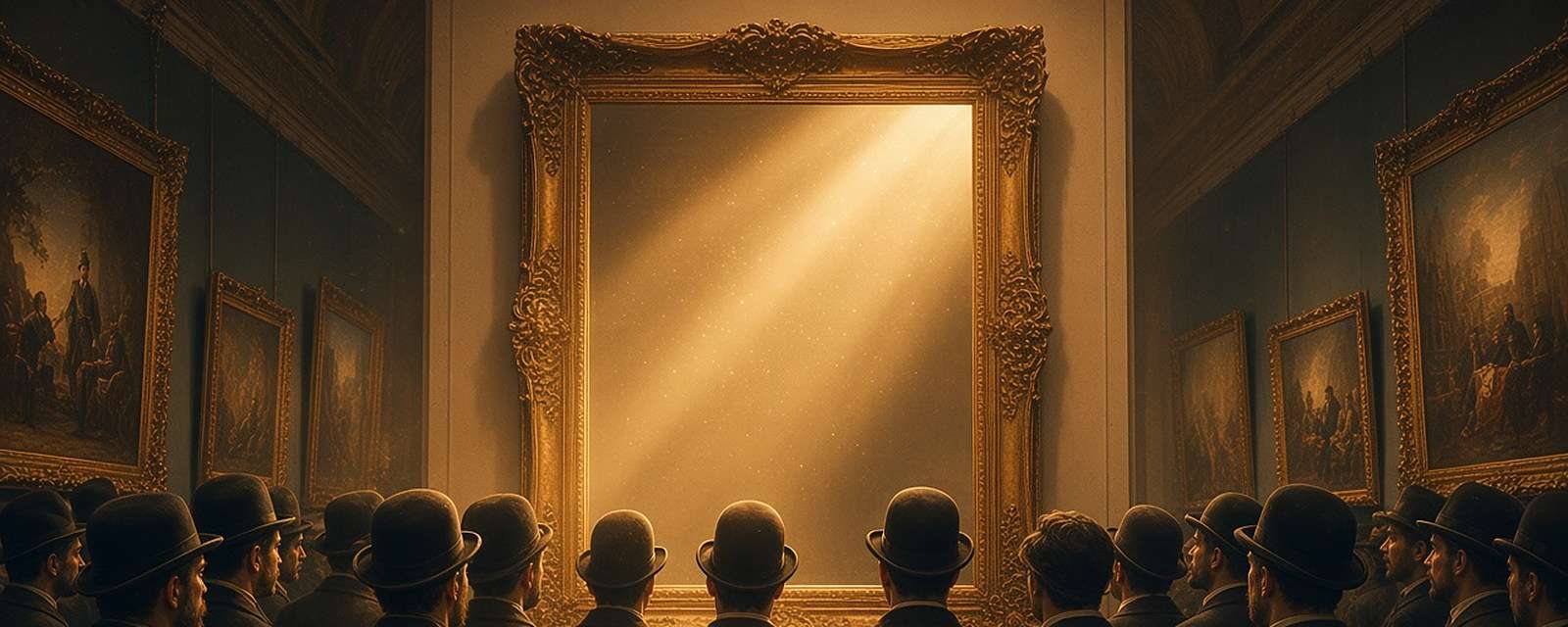
Now we are in Paris. It’s Tuesday, August 22nd, 1911, and a painter named Louis Béroud walks into the Louvre. He’s here to do what artists do in that museum, all the time, which is to set up an easel and copy a famous painting. And today he’s there for the Mona Lisa.
He walks into the room, and on the wall where she should be, there are four iron pegs. Just those pegs. No painting, no frame, no canvas.
So he finds a guard. The guard says, it’s no problem. They probably took it to the photographers. Paintings were taken down to be photographed all the time. So Béroud waits a couple of hours, he goes back, and once again he asks, and finally someone checks with the photographers. And the photographers say, “We don’t have it.”
Now the museum starts to panic. About 60 investigators come to search the building. They close the Louvre for a week. And as they start asking questions, here’s the part that makes me laugh and also groan at the same time. The painting had been gone for more than a full day before anyone noticed. One worker says he saw the empty spot early on Monday morning, and just assumed someone had moved it.
And the guard who normally watched that room was also out that day because his child had the measles. His replacement stepped away for a few minutes to smoke a cigarette. And that was the whole security apparatus. Measles and a cigarette made it possible to steal the Mona Lisa. It didn’t take them long to find in the back stairwell, the frame. And the glass that the painting had been behind, but no painting. No note. Not a single clue.
There was no question in anyone’s mind now that the Mona Lisa had been stolen. So who did it? No one knew. For two solid years, nobody knew. They questioned all kinds of people, and the painting stayed gone.
Then, in late 1913, a letter arrives in Florence at the shop of an art dealer named Alfredo Geri. Geri had put an ad in the papers saying he buys art. The letter is signed “Leonardo,” and it says, I have the Mona Lisa.
Now, Geri figures it’s a fake. People write in all the time. But he does something smart. He calls the director of the Uffizi gallery, a man named Giovanni Poggi. And together they come up with a plan. They write back and say, we’d love to see it first.
On December 10th, a man with a mustache walks into Geri’s shop and says, “I’m Leonardo.” And he says it’s in the hotel room. He’ll take 500,000 for the painting, not a penny less. So, Geri, who now has figured out that this might actually be real, says, “Sure, it sounds great.”
So the two men go to the hotel room. And the man with the mustache produces something wrapped in red silk. And Geri later wrote that they put it on the bed, and “to their astonishment the divine Mona Lisa appeared, intact and marvelously preserved.”
They told him that they would need to have it checked, so they took it to the Uffizi, and the next day the police arrested the thief. And that’s when, finally, the police got to ask the question they had been asking for two years. Who was this man, and how on earth did he pull it off?
His real name was Vincenzo Peruggia. He was an Italian who had once worked at the Louvre as a handyman. He’d even helped build the protective case for that very painting. The Mona Lisa. And his plan turned out to be almost embarrassingly simple. On Sunday night, he hid in a closet inside the museum. On Monday morning, while the Louvre was closed, he put on a white work smock like all the staff wore, walked up to the painting, and lifted it off the wall.
He carried it to the back stairwell, took it out of its glass and frame, and walked out. He looked like staff, so he blended right in. It was the oldest trick in the world: Carry a clipboard and you look like you know what you’re doing. Where had the Mona Lisa been all that time, while the police searched and the whole world wondered? In a one-room apartment on the edge of Paris was the Mona Lisa. For two years, the most famous painting in the world had been living with a handyman.
For two years, the most famous painting in the world had been living with a handyman.
Lucas Kitchen
Before that thief had filched that masterpiece, the Mona Lisa was a famous painting, sure. But historians say that when she vanished, something special happened. Newspapers around the world covered the story, and her fame exploded. The theft helped make her the world’s most famous painting.
She became ultimately priceless in the eyes of the world, in part, because she had gone missing. What does it say about us, about the world, that Mona Lisa became priceless only after she vanished? And was found again? Do we only learn what something is worth when it’s gone?

Story 5 · 24:32
It’s February 20th, 1974. Now we are on a tiny island in the Philippines called Lubang. A young Japanese man named Norio Suzuki is walking through a thick jungle with a very odd travel plan.
Suzuki is a young traveler, the kind of adventurer who goes around the world just to see what’s out there. And he has told his friends exactly what he’s looking for. He is in search of Lieutenant Onoda, a panda, and the abominable snowman. And he’s looking for them in that exact order. Now, I want you to appreciate how confident you have to be to put “Lieutenant Onoda” first on that list.
So who is Lieutenant Onoda? His full name is Hiroo Onoda. And in December of 1944, near the end of World War II, he was a young Japanese officer sent to this island. The war ended in 1945. That was almost 30 years ago, by this point, and he has never come home.
In 1959, the Japanese government officially declared him dead. And yet, on the island, the rumors never stopped. In 1972, a clash between local police and men hiding in the jungle made it clear that somebody was still out there. But who? Is it Onoda? Is he alive? Does he even know what year it is? No one can say.
So this young intrepid traveler, Suzuki goes on his search. It takes him four days of hiking through the jungle. And on the fourth day, he finds him. A man, alive. And Onoda would say later, “This hippie boy, Suzuki, came to the island to listen to the feelings of a Japanese soldier.”
And they became friends. But here’s where the story takes a turn. Suzuki says, the war is over, you can come home. And Onoda says no. He says, I will only stop if my commanding officer comes and tells me to stop.
Think about that from Suzuki’s side. He has done the impossible. A stranger got to the lost man. But it didn’t matter. The finder could not bring the found home. Why would a man say no to that? What does he know that the rest of the world doesn’t?
To understand, we have to go back to December of 1944, and look at what Onoda knew. His job was to stay behind and keep watch, and he was given orders that he must never give up. Not ever. The island was soon taken, and he and a few soldiers retreated into the jungle.
And then at the end of the war in August of 1945, Japan surrendered. Leaflets were dropped over the island to tell people. And Onoda and the soldiers with him looked at those leaflets and decided they were a trick. Why would you believe a piece of paper dropped out of an airplane? Later, newspapers and letters from their own families told them the war was over. They didn’t believe those either.
So the war ended, and Onoda just kept going. For years and years. He lived in the jungle on fruit and whatever else he could find. He wore the same uniform until it was patched over and over. And all that time, he believed he was doing his duty.
So now we begin to understand why he said no to young Suzuki. A friendly stranger with a camera is exactly what a trick would look like. The only person who could end it was the man who had given the order.
So Suzuki goes back to Japan with photographs as proof. And the government starts looking for that man. His old commander, Yoshimi Taniguchi. They found Taniguchi, selling books in the city.
So they gathered him up and they flew him to the island. On March 9th, 1974, he walks into the jungle and meets Onoda, and he reads him the orders. He tells him the army has ceased all combat. He relieves him of his duty. And Onoda, who had not budged for twenty-nine years, gives in. The next day he walks out, standing straight, very thin, in a uniform patched many times, and he was welcomed home.
Here’s the part I can’t stop thinking about. Onoda was not lost, at least as far as he knew. He was completely sure he knew where he was and exactly what he was supposed to be doing. He was on a mission. He was faithful. He was just faithful to an order that had ended three decades ago.
If a person can be lost and completely sure he isn’t, how would he ever know? How would you tell him if he was? And would he believe you?
Story 6 · 31:25
It’s 622 B.C. The city is Jerusalem, the capital of a small kingdom called Judah. And right in the middle of town, there’s a construction project. A big one. The temple is falling apart. Workmen are hauling stone and timber. Carpenters are patching walls. There’s dust on everything.
The man paying for all this is the king, a man named Josiah. Josiah is an interesting king. He took the throne when he was eight years old. After that unique childhood, time has passed and now Josiah is around 26. He’s decided the temple needs fixing, and he has set up a system to do it.
People drop silver into the collection box. The silver goes to the foreman. The foreman pays the carpenters and masons. And Josiah gives one unusual order: He says, don’t make the workers keep track of every coin. They work honestly, he says, so just trust them. I love that. A construction crew with integrity.
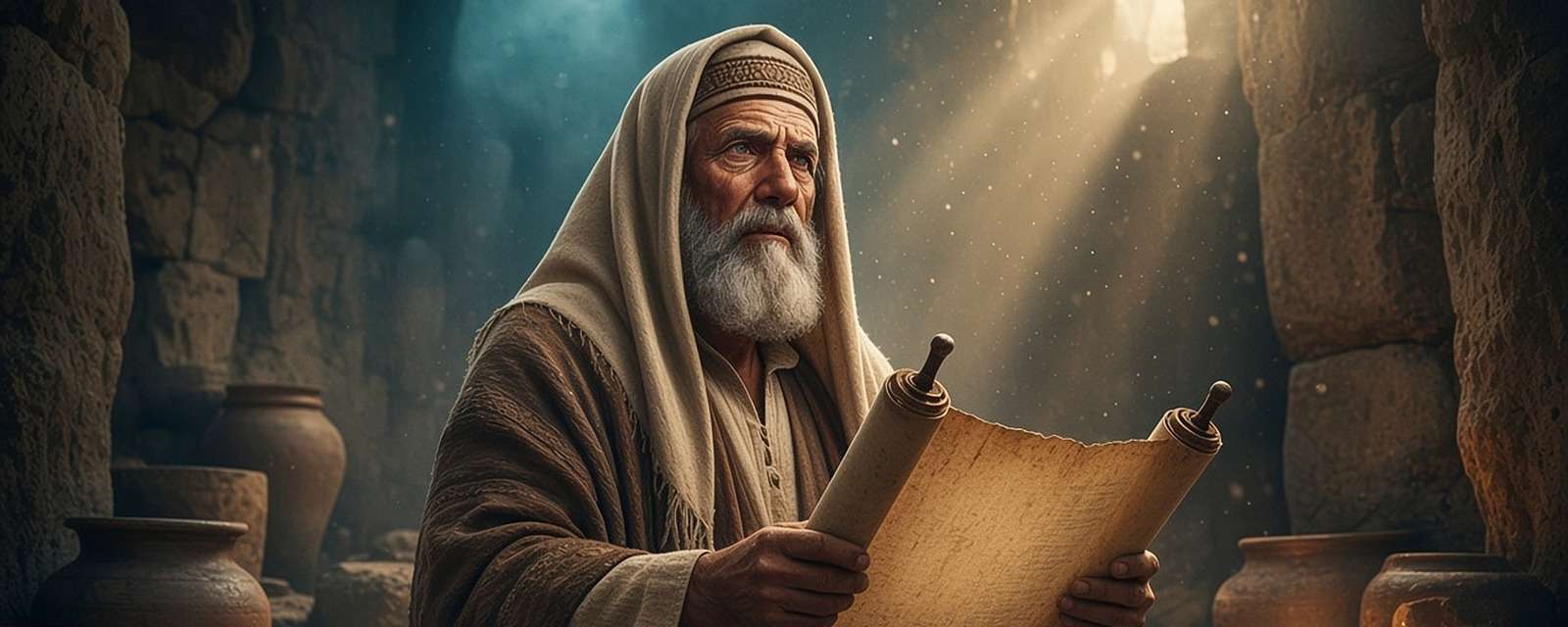
So the king sends a man named Shaphan to check on the money. Shaphan is a scribe, just the kind of man you put in charge of this type of task. He walks over to the temple and meets with the high priest, a man named Hilkiah. They count out the silver. Everything is in order. And then, somewhere in the middle of this pretty boring meeting, Hilkiah says something that stops it cold. He says, I found something. A scroll.
Now, a scroll in a temple is not a shocking thing. But this one is old, and it’s dusty, and nobody in the room knows where it came from. It was somewhere in the building during the repairs. Maybe behind a wall, maybe at the back of a storeroom. We don’t really know. Hilkiah hands it to Shaphan. And Shaphan, being a scribe, does what scribes do. He unrolls it. And he starts to read.
Shaphan finishes the reading, and he goes back to the palace. He walks in to see the king. And the first thing he does is report on the money. Everything’s going fine with the silver, boss. The workers are paid. Etc. Then, almost as an afterthought, he says, “Oh, and the priest gave me a scroll.” And the king says, what is in it? And Shaphan says, let me read it to you.
So Shaphan reads it out loud. And now we finally find out what this thing is. It’s a book of law, the founding rules for the whole nation. A very, very important document. How to treat each other, how to worship, what the people had promised to do way back in the beginning. And as he reads, the king does something no one expects.
He grabs his own robes and tears it. In that world, that’s what you did when you were crushed by grief. Josiah had grown up thinking he knew how his country was supposed to work. And now, here are the rules in black and white, and his kingdom hasn’t been following them. Not for a very long time.
So what does the king do? Well, he doesn’t keep it to himself. He calls everyone together. The elders, the priests, the leaders, the ordinary people, from the youngest to the oldest. They all gather at the temple. And the king stands there and reads the whole scroll out loud, so everyone can hear it. Then he promises, in front of the whole crowd, that he will follow it with all of his heart.
The result is immediate. They throw a festival. And it’s a big one. The record says nothing like it had been held in hundreds of years. Imagine that. Hundreds of years missing it. And it all started because a priest in the middle of repairs said, “I found something.”
So this story is in the Bible, in the book of Second Kings. It’s worth a reading for yourself.
But what I keep coming back to is how close it was. That scroll, it was inside the temple the whole time, a place where they moved and walked and spent their time right there near them. It was lost but inches from being found.
So here’s something that I just can’t stop noticing.
Story 7 · 37:29
A ring can sit in the mud under salt water for 46 years. A painting can hang empty on a wall for more than a full day before anyone looks up. A soldier can walk the same jungle for 29 years, completely sure of where he is. A scroll can sit inside of a building built to protect it. Lost things almost never announce themselves. Mostly, they just go quiet.
Lost things almost never announce themselves. Mostly, they just go quiet.
Lucas Kitchen
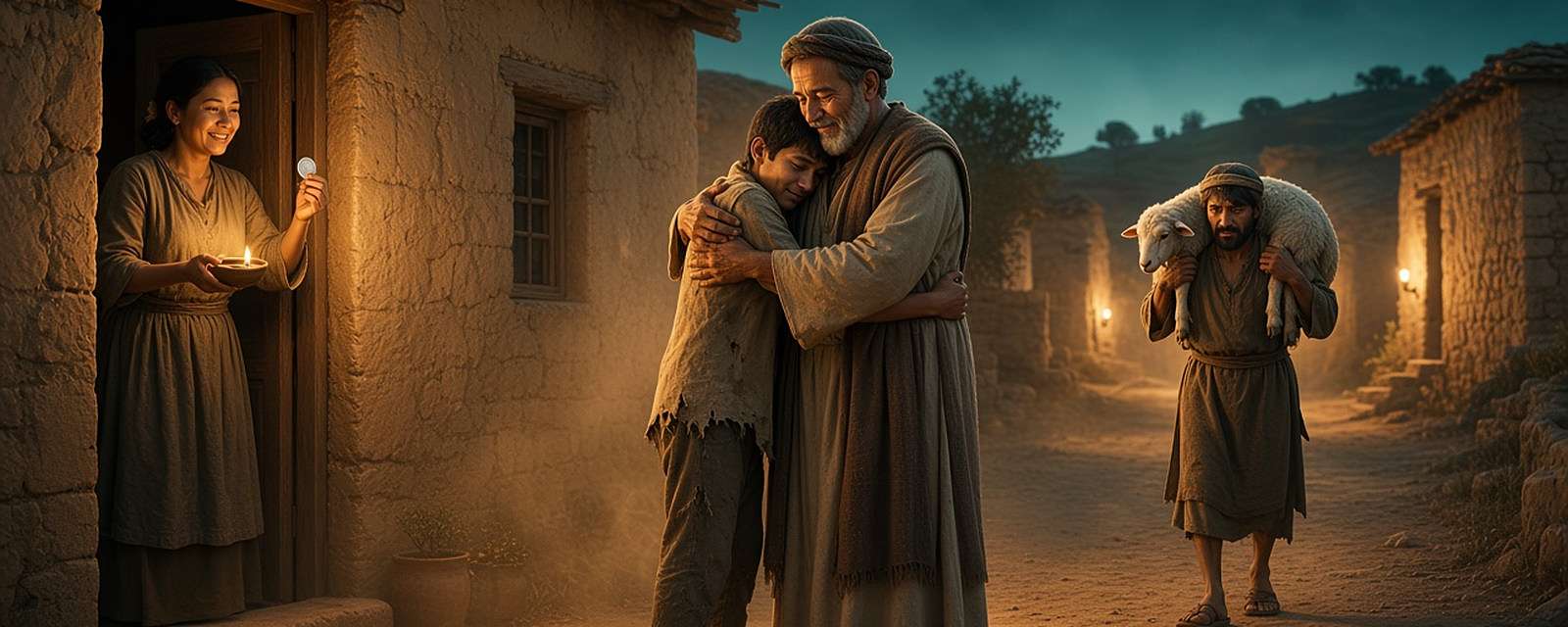
Jesus told three stories about this, and you probably know them. A sheep. A coin. A son. A shepherd with 99 sheep safe at home, who leaves them to go looking for one. A woman who lights a lamp and sweeps the whole house for a single coin. A father with a long road in front of his house. Running to his son who has been lost. And in all three: this line keeps coming up. “Rejoice with me, because I have found what’s lost.”
Reflection · 38:45
Now, think about what these lost things are doing in the stories.
What does a sheep do to get found? What does a coin do? What does a son do, really, besides stumble toward home with a speech you’ll never finish? And why does the party start before anyone has explained anything?
So let me ask it a different way. What if you were the one that was lost? Would you know? Onoda didn’t. He was calm, and disciplined, and faithful, and the jungle felt like home. How many ways are there to be lost without feeling it at all? Is it a place? A habit? A silence between two people? A door you stop knocking on?
And if you were lost, what would it sound like to be found? Whose voice would you believe? Would you trust the leaflet from the airplane? The letter from home? Or only the one voice you couldn’t argue with?
Now just imagine. What if someone had already noticed you were missing? Maybe a friend, maybe a mother, maybe a father. What if someone had already lit the lamp? For you? How long would they have been up, sweeping? And what would it mean to be worth that much trouble to anyone?
What would it do to you, to hear your name from a long way off? As you long to return home?
Close · 41:15
Thank you so much for sitting down with me. If something is lost in your life this week, a ring, a friend, a faith, I hope you’ll go looking. And if it’s you that’s lost, I hope you’ll listen closely. Finally, somebody may be calling your name.
This has been More to the Story, a family podcast from Free Grace International. If you want more stories and books, like this, you can visit my website, lucaskitchen.com. For more content from our publisher, Free Grace International, you can go to freegrace.in. I’m Lucas Kitchen and we’ll talk again next week.
“…because this son of mine was dead and is alive again; he was lost and is found!” — Luke 15:24 (CSB)
Books and more: lucaskitchen.com · freegrace.in (Free Grace International)
Scripture quotations are from the Christian Standard Bible®, Copyright © 2017 by Holman Bible Publishers. Used by permission. Christian Standard Bible® and CSB® are federally registered trademarks of Holman Bible Publishers.

Christian author, pastor, and podcaster.







Naked Grace: my own story of searching for a clear answer to "What do I have to do to be saved?"
Missionary To Mars: my most-read novel, a Christian sci-fi adventure.
Questions, speaking, or podcast invitations? Send me a note.
