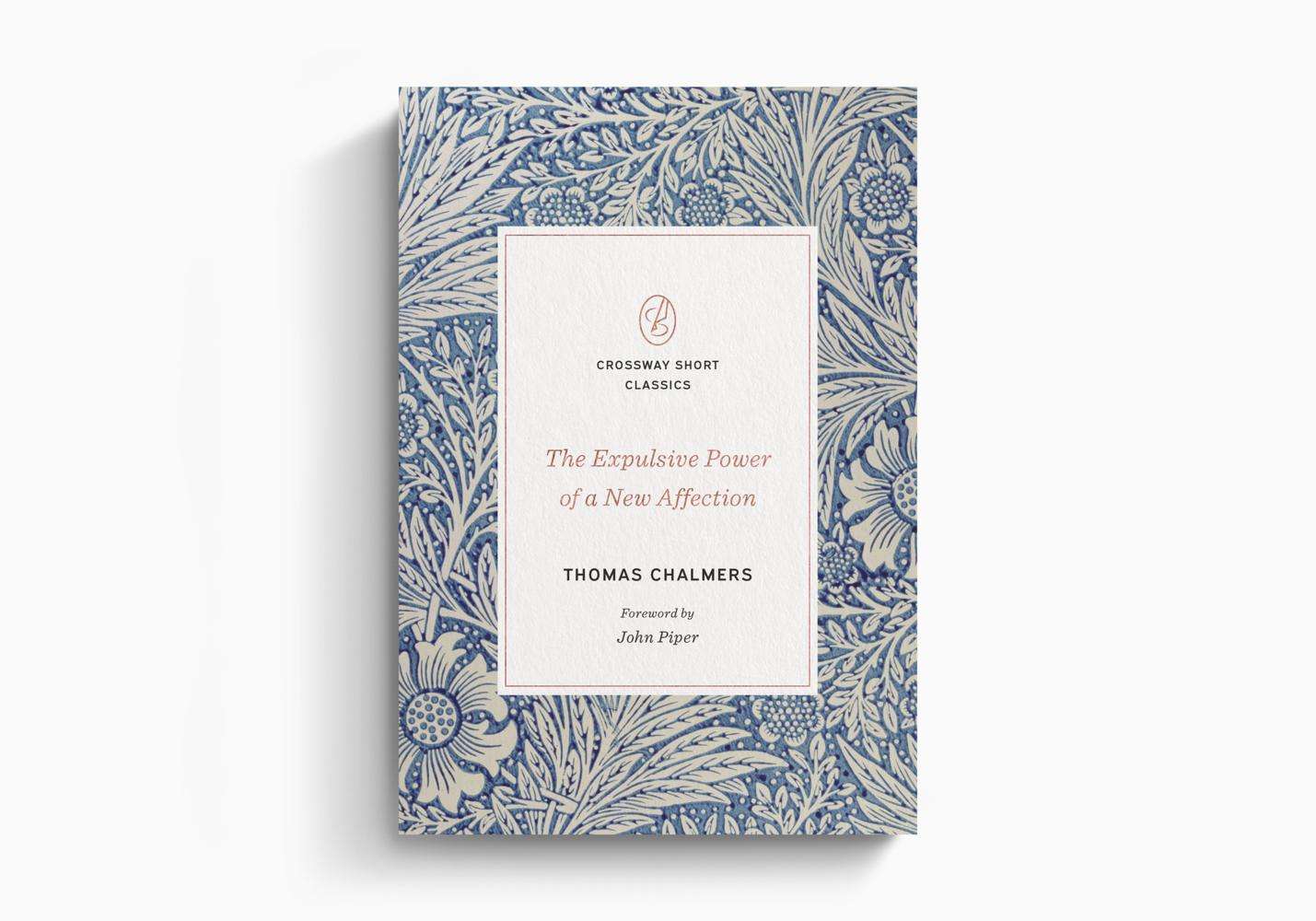


The basic lesson of this booklet should be in every pastor and preacher’s toolbox as they seek to help Christians mature and grow. While John Piper endorses this book with a foreword, it seems to me that Chalmers’s arguments are much better suited to a Free Grace perspective than to a Lordship Salvation perspective (as Chalmers’ own language will attest!).
This small book is part of the Crossway Short Classics series and reprints a sermon by Thomas Chalmers (1780-1847), one of the founders of the Free Church of Scotland. Chalmers meditates on 1 John 2:15: “Love not the world, neither the things that are in the world. If any man love the world, the love of the Father is not in him.” That verse speaks to the problem of competing loves. We either have the love of the world or the love of the Father. The lecture explores this idea of competing loves. This is more of an exercise in theological anthropology than a strict commentary on that verse.
Chalmers claims that the human heart is made to love. It will always love something. And since it will always love something, when it comes to trying to help transform the heart from loving the world to loving God, it is not enough to tell people to stop loving the things of this world or to point out how such loves are vain, destructive, or fleeting. But that will not successfully remove the love of the world from the heart, because the heart can’t abide a vacuum. Even if it knows the love of the world isn’t fulfilling, it will continue to cling to the things of this world, because it can’t stand to be empty: “The heart must have something to cling to—and never, by its own voluntary consent, will it so denude itself of its attachments that there shall not be one remaining object that can draw or solicit it” (p. 17). “You have all heard that nature abhors a vacuum. Such at least is the nature of the heart, that though the room that is in it may change one inmate for another, it cannot be left void without the pain of intolerable suffering” (p. 41).
For Chalmers, this explains why threatening or legalistic spiritualities are ineffective in changing the heart’s desires. It tells people to let go, to reject, to give up, but then leaves the heart with nothing to cling to. It leaves a vacuum, which the heart cannot abide. The worldly heart will cling tenaciously to what it knows cannot satisfy. So what can be done?
For Chalmers, the only way to finally push out the love of the world is to present it with a much more worthy love. “The love of the world cannot be expunged by a mere demonstration of the world’s worthlessness. But may it not be supplanted by the love of that which is more worthy than itself?” (Pp. 46-47). The central claim of this book is that “the only way to dispossess it of an old affection is by the expulsive power of a new one” (p. 49). The new affection is the love of God for the sake of God as revealed in the gospel: “in the gospel do we so behold God as that we may love God” (p. 50).
This is where Free Grace proponents will especially appreciate Chalmers. He says that not just any vision of God will do. There are terrifying, legalistic views of God that will not be successful in supplanting the love of the world.
It is when he stands dismantled of the terrors that belong to him as an offended lawgiver and when we are enabled by faith, which is his own gift, to see his glory in the face of Jesus Christ and to hear his beseeching voice as it protests good will to men and entreats the return of all who will to a full pardon and a gracious acceptance, it is then that a love paramount to the love of the world, and at length expulsive of it, first arises in the regenerated bosom (p. 51).
Legalistic gospels cannot accomplish this change of affection: “On the tenure of ‘Do this and live,’ a spirit of fearfulness is sure to enter; and the jealousies of a legal bargain chase away all confidence from the intercourse between God and man” (pp. 65-66). The reason is that a works-based, conditional salvation raises too much distrust for it to be an expulsive power of love. “Retain a single shred or fragment of legality with the gospel and we raise a topic of distrust between man and God. We take away from the power of the gospel to melt and to conciliate” (p. 67). If salvation depends on our works, and we’re not sure of how really good we have been, or are, or will be in the future, then we cannot trust God to save us. The heart cannot love that.
Only a gospel of grace can truly transform the heart, because it presents a secure and stable relationship with God: “It is only when, as in the gospel, acceptance is bestowed as a present, without money and without price, that the security that man feels in God is placed beyond the reach of disturbance” (p. 66). But salvation must be free, and not at all based on our works. “Salvation by grace—salvation by free grace—salvation not of works, but according to the mercy of God—salvation on such a footing is not more indispensable to the deliverance of our persons from the hand of justice than it is to the deliverance of our hearts from the chill and the weight of ungodliness…For this purpose, the freer it is, the better it is” (p. 67).
Although any Christian can benefit from this insight about how inner transformation comes, Chalmers believes this is especially important for preachers to understand: “Thus may we come to perceive what it is that makes the most effective kind of preaching” (p. 5). The preaching that is most effective at changing hearts is the kind that proclaims a gracious gospel. Such preaching can succeed where the law will not: “but with the tidings of the gospel in commission, he may wield the only engine that can extirpate them” (p. 54).
As I develop my own homiletic for my preaching ministry, Gerhard Forde and Paul F. M. Zahl have convinced me to end all my sermons with the gospel, rather than with law, application, or a moralistic challenge (see my One-Point Preaching). I do that out of the conviction that law cannot transform anyone, meaning ending a sermon with law to improve a congregation’s spiritual growth is counterproductive. It will have the opposite effect. So I end my sermons with grace, with gospel, with a proclamation of “Christ for you.” In this booklet, Chalmers explains why that is the correct homiletical choice and what must be done to give the heart greater reasons to love God rather than the world.
This small book is attractively designed, printed, and can be read in a single sitting. Admittedly, Chalmers writes in difficult 19th-century prose which not everyone will find easy to understand, but his basic analysis of the heart’s loves is surely correct. Recommended.
________________________________________________
Shawn Lazar (DPT, McMaster Divinity College) is the pastor of Gateway United Baptist Church in Denton, TX. Purchase his book One-Point Preaching here and his latest book Once Saved Always Saved? here.

